

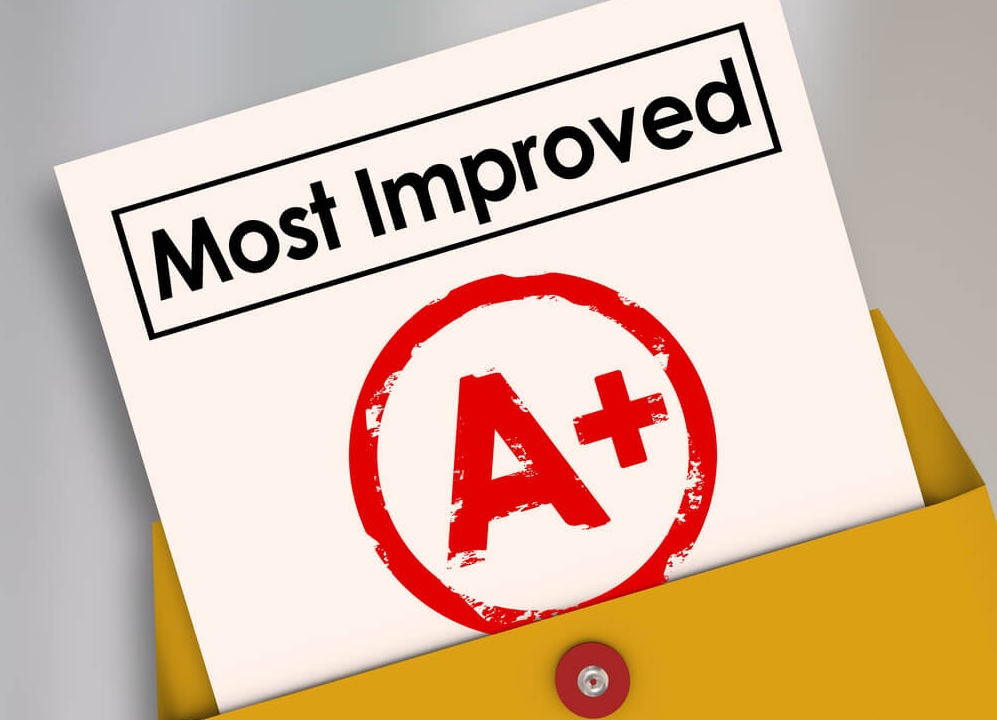
Should Tutoring Continue When a Student’s Grades Improve?

When a student’s grades improve, parents naturally wonder whether tutoring is still necessary. In many cases, the best decision is not to stop immediately but to reassess the student’s needs, independence and long-term goals.

Improved grades are an encouraging sign that tutoring is working. However, one strong test or report card may not mean that every learning gap has been resolved. Continuing tutoring for another unit, reducing sessions gradually or moving to occasional check-ins can help determine whether the improvement is stable.

The goal of tutoring should not be permanent dependence. It should be lasting academic progress and the ability to succeed independently.

Should Tutoring Continue After Grades Improve?

For many students, tutoring should continue temporarily after grades improve. This gives the student time to consolidate new skills, apply them to different topics and demonstrate that progress can be maintained without constant assistance.

Tutoring may still be valuable if the student:

  • Has improved in one unit but has gaps in earlier material
  • Still needs help starting homework or assignments
  • Performs well with support but struggles independently
  • Is approaching final exams or a more difficult course
  • Lacks effective study and organizational habits
  • Continues to experience anxiety before tests
  • Needs a specific average for college or university admission

The right decision should be based on more than a single grade. Parents should consider how the student earned that grade and whether the habits behind the improvement are becoming independent.

Why Better Grades May Not Tell the Whole Story

A grade is an important measure of progress, but it is only one piece of information.

A student’s mark may improve because the current unit matches their strengths, a test was less difficult or a tutor helped them prepare intensively. The next unit may require different skills and expose unresolved gaps.

This is particularly relevant in Ontario math and science courses, where concepts build on one another. A student may understand linear relations but struggle when those skills are applied to quadratics. In senior courses such as MHF4U Advanced Functions, SCH4U Chemistry or SPH4U Physics, an earlier weakness in algebra can continue affecting performance across several units.

Parents should look for evidence of deeper learning. Can the student explain the concept without notes? Can they solve an unfamiliar problem? Do they recognize and correct their own errors? These indicators may reveal more than the grade alone.

The Benefits of Continuing Tutoring

1. Turning Short-Term Improvement Into Lasting Progress

Repeating and applying new skills helps move learning beyond short-term test preparation. Continued tutoring gives students opportunities to revisit concepts and use them in new contexts.

A student who recently improved in math, for example, may benefit from practising mixed questions instead of focusing only on the current chapter. This shows whether they can recall earlier methods and decide independently which strategy to use.

2. Building Independent Study Habits

Effective 1-on-1 tutoring should teach students how to learn, not simply provide answers. Once immediate academic gaps are under control, sessions can increasingly focus on:

  • Planning assignments and study time
  • Taking useful notes
  • Reviewing mistakes
  • Preparing for tests in advance
  • Breaking large tasks into smaller steps
  • Asking better questions
  • Checking work independently

These habits can help students maintain their grades after regular tutoring ends.

3. Preparing for More Difficult Material

Improvement often occurs while the student is working through familiar or manageable topics. A tutor who understands the Ontario curriculum can help the student prepare for upcoming units that are likely to be more challenging.

This is especially useful during transition years. Grade 8 students preparing for Grade 9, Grade 10 students entering senior academic courses and Grade 12 students preparing for university may benefit from continuing support even after their current marks improve.

Tutoring can shift from catching up to getting ahead. Previewing terminology, formulas or foundational concepts can make new classroom lessons easier to follow.

4. Protecting Confidence and Momentum

Academic improvement often changes how students see themselves. A child who previously believed they were “bad at math” may begin participating in class, completing homework more willingly and approaching tests with less anxiety.

Stopping support too quickly can be discouraging if the student encounters another difficult unit and their marks fall again. A gradual transition allows the student to experience success with increasing independence while knowing that help remains available.

When Should Tutoring Be Reduced Instead of Stopped?

Improved grades may indicate that the original tutoring schedule is no longer necessary. Rather than ending sessions suddenly, parents can reduce their frequency.

For example, a student attending twice per week might move to weekly sessions. A student meeting weekly might switch to biweekly check-ins or book support before major tests and exams.

A reduced schedule can be used to:

  • Review difficult homework questions
  • Monitor new units
  • Prepare for evaluations
  • Reinforce older concepts
  • Check study routines
  • Address small problems before they grow

This maintenance approach is often appropriate for students who are progressing well but are not yet fully independent.

Signs a Student May Be Ready to Stop Regular Tutoring

Tutoring may no longer be needed when progress is both consistent and independent. Positive signs include:

  • Grades remain stable across several assessments or different units
  • Homework is completed without frequent reminders
  • The student begins problems independently
  • Mistakes can be identified and corrected
  • Study plans are created before tests
  • The student asks teachers for clarification when needed
  • New concepts are learned without becoming overwhelmed
  • Confidence remains stable when the work becomes harder

Ideally, these behaviours should appear over time—not only during one successful week. Parents can also ask the tutor whether the student still requires direct instruction or is primarily using sessions for reassurance.

A responsible tutor or tutoring agency should be willing to recommend reducing or concluding tutoring when regular support is no longer providing meaningful value.

How Long Should Tutoring Continue After Grades Improve?

There is no single timeline that applies to every student. A more useful approach is to continue until the student demonstrates stable performance through at least one new unit or several independent assessments.

Elementary students may need more time to build foundational literacy or numeracy skills. High school students might continue until a semester ends, an exam is completed or a difficult prerequisite course has been successfully managed.

The original purpose of tutoring also matters. A student who needed help with one unit may stop sooner than a student addressing several years of learning gaps.

Questions Ontario Parents Should Ask

Before changing the tutoring schedule, parents can discuss the following questions with the student and tutor:

  • Have the original learning goals been achieved?
  • Are the improved grades consistent?
  • Can the student complete work without prompting?
  • Do earlier learning gaps still affect current work?
  • Is a difficult unit, exam or course transition approaching?
  • Would less frequent tutoring provide enough support?
  • Does the student feel confident about working independently?

The answers can help families make a decision based on evidence rather than reacting to one mark.

Finding the Right Level of Ongoing Support

The purpose of private tutoring is not simply to raise a grade. Strong tutoring should improve understanding, confidence, problem-solving and independence. When grades rise, the tutoring plan should evolve with the student.

The Tutoring Expert provides personalized in-home and online tutoring for Ontario students. Our tutors can adjust sessions as a student progresses, moving from skill recovery and weekly support to enrichment, exam preparation or occasional academic check-ins.

Continuing tutoring after grades improve does not always mean maintaining the same schedule indefinitely. It means ensuring that progress is secure, the student is prepared for what comes next and support is reduced at the right time.

SPH4U Grade 12 Physics: Common Challenges and Study Tips

SPH4U Grade 12 Physics is one of the most demanding science courses in the Ontario curriculum. Students must combine advanced scientific concepts with algebra, trigonometry, vectors, diagrams and multi-step problem-solving. Memorizing formulas is not enough: success depends on understanding when each principle applies and how several ideas work together.

The most effective way to study SPH4U is to practise problems consistently, draw clear diagrams, explain the underlying physics and correct mistakes before moving to the next unit. This guide examines the most common SPH4U challenges and offers practical study tips for Ontario students.

What Is Covered in SPH4U Grade 12 Physics?

SPH4U is a Grade 12 university-preparation course that builds on SPH3U Grade 11 Physics. According to the Ontario secondary science curriculum, the major areas of study include:

  • Dynamics
  • Energy and momentum
  • Gravitational, electric and magnetic fields
  • The wave nature of light
  • Revolutions in modern physics

The modern physics unit introduces topics from quantum mechanics and special relativity. Students also continue developing scientific investigation, laboratory, data-analysis and communication skills.

SPH3U is the prerequisite for SPH4U and although Grade 12 math is not a course prerequisite, strong algebra, trigonometry, graphing and equation-manipulation skills are important.

SPH4U is commonly required for engineering and physics programs and may be required or recommended for other university science programs. Requirements differ, so students should check their intended programs through Ontario Universities’ Info and individual university websites.

Why Do Students Find SPH4U Difficult?

1. Translating Word Problems Into Physics

A typical SPH4U question may include several values, directions and physical relationships. Students must determine what information matters, identify the unknown quantity and select an appropriate principle.

The difficulty often begins before any calculation takes place. If a student misunderstands the physical situation, even flawless algebra will produce the wrong result.

Before using a formula, students should write down the known values, identify the unknown and describe the situation in words or with a diagram.

2. Working With Vectors and Directions

Physics quantities such as force, velocity, acceleration, momentum and field strength have both magnitude and direction. Students must use positive and negative signs consistently and may need to separate vectors into horizontal and vertical components.

A common mistake is treating a vector like an ordinary number. Students may calculate the correct magnitude but lose marks because the direction is missing or incorrect.

Drawing coordinate axes and defining a positive direction before starting can prevent many sign errors.

3. Choosing Between Energy, Momentum and Forces

Many mechanics problems can appear similar even though they require different approaches. One question may involve Newton’s laws, another conservation of energy and another conservation of momentum.

Students often look for a formula containing the available variables instead of asking which physical principle governs the situation. A better approach is to identify the event:

  • Forces and acceleration suggest a dynamics approach.
  • Changes in speed or height may suggest energy.
  • Collisions and explosions usually suggest momentum.
  • Circular or orbital motion may involve net force and fields.

Understanding these distinctions makes multi-step problems more manageable.

4. Understanding Gravitational, Electric and Magnetic Fields

The fields unit can be challenging because students must connect abstract concepts with mathematical models. Gravitational and electric forces share similar structures, while magnetic forces depend on the motion and direction of charged particles.

Students may also need to distinguish between force, field strength, potential and potential energy. These quantities are related but are not interchangeable.

Comparison charts can help. Students should record the definition, equation, units, direction and physical meaning of each quantity.

5. Visualizing Waves and Light

Interference, diffraction and polarization require students to interpret diagrams and understand wave behaviour that may be difficult to visualize. Simply memorizing definitions rarely prepares students for application questions.

Sketching wave fronts, paths and interference patterns can make these problems clearer. Simulations and classroom demonstrations are also valuable because they connect mathematical relationships with visible behaviour.

6. Adjusting to Modern Physics

Quantum mechanics and special relativity challenge many familiar ideas about matter, energy, space and time. Students must learn models that may seem counterintuitive while still applying equations accurately.

Rather than trying to make every idea fit everyday experience, students should focus on the evidence supporting each theory, the conditions under which it applies and the predictions it makes.

How to Study Effectively for SPH4U

Strengthen Your Math Skills Early

Many physics mistakes are actually math mistakes. Students should review rearranging equations, solving systems, scientific notation, significant digits, graph slopes, trigonometric ratios and vector components.

If these skills are weak, reviewing them before or during the first SPH4U unit can prevent difficulties from accumulating.

Draw a Diagram for Every Major Problem

A good diagram is part of the solution, not an optional decoration. Depending on the question, students may need a free-body diagram, vector diagram, field diagram, ray diagram or graph.

Label known quantities, directions, angles and coordinate axes. A clear visual representation often reveals which equations or principles should be used.

Use a Consistent Problem-Solving Process

For every calculation, follow the same steps:

  • Identify the known and unknown quantities.
  • Convert values into appropriate units.
  • Draw and label a diagram.
  • State the relevant physical principle.
  • Select and rearrange the equation.
  • Substitute values with units.
  • Check the direction, units and reasonableness of the answer.

This method reduces careless errors and makes written solutions easier for teachers to follow.

Understand Formulas Instead of Memorizing Them Alone

A formula sheet is useful only when students understand what each equation represents. For every formula, ask:

  • What does each variable mean?
  • What units should be used?
  • Under what conditions is the formula valid?
  • Is the quantity a scalar or vector?
  • How would changing one variable affect another?

This turns a collection of equations into a connected understanding of physics.

Practise Mixed Problems

Completing several nearly identical questions can create false confidence. On tests, students must decide independently which method to use.

After learning a concept, practise a mixture of dynamics, energy, momentum and fields questions without being told which formula applies. Mixed practice strengthens recognition and prepares students for cumulative exams.

Review Mistakes Carefully

When an answer is incorrect, do not simply copy the solution. Determine whether the mistake came from the concept, diagram, formula choice, algebra, units or interpretation.

Keeping a short error log can reveal patterns. A student who repeatedly loses marks because of missing directions or incorrect unit conversions can address that specific habit.

Study Consistently Throughout the Semester

SPH4U concepts build on one another, making last-minute studying especially ineffective. Aim for several shorter study periods each week instead of one long session before a test.

During each session, review notes briefly, solve problems without looking at examples and finish by revisiting one earlier topic. Consistent retrieval helps information remain accessible for the final exam.

How Should Students Prepare for an SPH4U Test or Exam?

Begin by organizing learning goals by unit. For each goal, determine whether you can explain the concept, choose the appropriate equation and solve a problem without assistance.

Complete practice questions under realistic time limits. Show every step, include units and write final answers with appropriate direction and significant digits. If a question is taking too long, identify what is causing the delay rather than repeatedly attempting the same method.

In the days before an exam, focus on mixed review and weaker areas. The night before should be used for light review, not learning an entire unit.

When Can an SPH4U Physics Tutor Help?

A Grade 12 physics tutor can help when a student understands classroom examples but struggles to begin unfamiliar problems independently. Tutoring may also be valuable when gaps in algebra, vectors or Grade 11 physics are limiting progress.

The Tutoring Expert provides personalized SPH4U tutoring for Ontario students. Our physics tutors can follow the student’s current classroom unit while revisiting earlier skills that are affecting performance. In-home tutoring is available across the GTA and surrounding communities, with online physics tutoring offered throughout Ontario.

With consistent practice, clear problem-solving habits and support targeted to specific learning gaps, students can approach SPH4U with greater confidence and build the foundation needed for university-level science and engineering.

MHF4U vs MCV4U vs MDM4U: A Quick Guide to Grade 12 Math

Choosing a Grade 12 math course in Ontario can be confusing, especially when university admission requirements are involved. Advanced Functions (MHF4U), Calculus and Vectors (MCV4U), and Mathematics of Data Management (MDM4U) are all university-preparation courses, but they cover very different material.

The short answer is that students interested in engineering, mathematics, computer science or many science programs will generally need MHF4U and MCV4U. Students interested in statistics, social sciences or data-related fields may find MDM4U especially useful. Some business and health science programs accept or require different combinations.

Students do not necessarily have to choose only one. Depending on their goals, they may take two—or even all three—Grade 12 math courses.

MHF4U vs MCV4U vs MDM4U at a Glance

CourseMain FocusOften Suited to Students Interested In
MHF4U Advanced FunctionsAlgebra, functions and trigonometryScience, business, mathematics, computer science and engineering
MCV4U Calculus and VectorsDerivatives, rates of change and vectorsEngineering, physics, mathematics, economics and some science programs
MDM4U Data ManagementProbability, statistics and data analysisBusiness, social sciences, psychology, health studies and data-related fields

University prerequisites vary considerably. Students should always check their intended programs through Ontario Universities’ Info and the university’s own admissions website before finalizing their courses.

What Is MHF4U Advanced Functions?

MHF4U is the Grade 12 Advanced Functions course in Ontario. It builds directly on the algebraic and graphical skills developed in MCR3U Grade 11 Functions.

Students study polynomial, rational, exponential, logarithmic and trigonometric functions. They learn to transform graphs, solve complex equations, combine functions and apply functions to real-world situations. Strong factoring, exponent-law and algebra skills are essential.

MHF4U is commonly required for university programs involving mathematics, science, technology or business. It is also the foundation for MCV4U. Under the Ontario mathematics course prerequisites, Advanced Functions must be completed before or taken concurrently with Calculus and Vectors.

MHF4U may be a good choice if you:

  • Enjoy algebra, equations and graphing
  • Are considering a university STEM program
  • Plan to take MCV4U
  • Want to keep a broad range of university options open

Because Advanced Functions is required for many programs, students who are uncertain about their university plans often take it to preserve flexibility.

What Is MCV4U Calculus and Vectors?

MCV4U combines two significant areas of mathematics: calculus and vectors.

The calculus portion introduces limits, derivatives, rates of change and optimization. Students learn how derivatives describe the behaviour of functions and use them to solve problems involving maximums, minimums, motion and changing quantities.

The vectors portion covers geometric and algebraic representations of vectors, dot products, cross products, and equations of lines and planes in two- and three-dimensional space.

MCV4U is especially relevant for students planning to study engineering, mathematics, physics or other programs that include university-level calculus, linear algebra or mechanics. It may also be required for certain computer science, economics, science and business programs.

This course may be right for you if you:

  • Are comfortable with Advanced Functions
  • Enjoy abstract and multi-step problem-solving
  • Plan to enter a math-intensive university program
  • Expect to take calculus, physics or linear algebra after high school

MCV4U moves quickly and assumes students have strong algebra and function skills. Taking MHF4U first, rather than concurrently, can make the transition more manageable.

What Is MDM4U Mathematics of Data Management?

MDM4U focuses on probability, statistics and the organization and interpretation of data. Although it involves calculations, it is different from the algebra-heavy structure of MHF4U and MCV4U.

Students explore counting techniques, probability distributions, statistical analysis, one-variable and two-variable data, and methods of evaluating information. The course also normally includes a culminating investigation in which students collect, organize, analyze and present data.

Data Management can be valuable for students interested in business, psychology, sociology, health studies, geography, economics, marketing or other areas in which research and statistics are important.

MDM4U may suit you if you:

  • Enjoy interpreting graphs, trends and real-world information
  • Are interested in probability or statistics
  • Prefer applied questions over advanced algebra
  • Want to develop research and data-literacy skills

However, MDM4U does not normally replace MHF4U or MCV4U when a university program specifically requires those courses.

Which Grade 12 Math Course Is Required for University?

The correct choice depends on the program—not simply the university or degree type.

Engineering programs typically require both MHF4U and MCV4U. Mathematics and physics programs usually require both as well. Computer science requirements vary, but many programs require Advanced Functions and Calculus and Vectors.

Business and commerce requirements differ widely. One university may require MHF4U, while another may accept MHF4U, MCV4U or MDM4U. Health and life science programs may require Advanced Functions, Calculus and Vectors, or both, depending on the institution.

Social science and humanities programs are less likely to require a specific Grade 12 math course, although MDM4U can be helpful for programs involving research methods and statistics.

Admission requirements can change from one application cycle to the next. Students should create a list of prospective programs and record the exact prerequisites for each one before selecting Grade 12 courses.

Which Course Is the Easiest?

There is no Grade 12 math course that is easiest for every student.

MHF4U can be challenging for students with gaps in algebra, factoring, exponent laws or trigonometry. MCV4U requires strong conceptual understanding and accurate multi-step work. MDM4U may have less advanced algebra, but its probability questions, counting problems, written interpretations and culminating project can still be demanding.

The better question is: Which type of math matches your strengths?

A student who enjoys equations may prefer MHF4U, while someone who enjoys analyzing information may perform better in MDM4U. Students should not select a course only because they have heard it is easier—especially when that decision could remove a required university prerequisite.

Can You Take All Three Grade 12 Math Courses?

Yes. Students may take MHF4U, MCV4U and MDM4U if their schedules allow it.

Taking all three can build a broad mathematical foundation and provide additional flexibility when calculating a top-six Grade 12 U/M admission average. However, three senior math courses also create a substantial workload. Students should consider their other demanding courses, extracurricular commitments and target admission average.

For many STEM applicants, MHF4U and MCV4U are the priority. MDM4U can then be added if the student is interested in statistics or wants another Grade 12 university-preparation course.

How to Make the Right Choice

Before registering, students should:

  • Identify several possible university programs.
  • Check each program’s current prerequisites.
  • Speak with their school guidance counsellor.
  • Consider their Grade 11 Functions performance.
  • Choose courses that preserve realistic future options.

Students who struggled in MCR3U should address foundational gaps before beginning MHF4U or MCV4U. Grade 12 math courses progress quickly, and small weaknesses in algebra or trigonometry can become larger problems during later units.

The Tutoring Expert provides personalized MHF4U, MCV4U and MDM4U tutoring for Ontario students. With in-home tutoring across the GTA and surrounding communities, as well as online tutoring throughout Ontario, students can receive support with current lessons, earlier skill gaps, assignments, tests and exam preparation.

Choosing the right Grade 12 math course begins with understanding both your academic strengths and your future goals. When university prerequisites guide the decision, students can keep their options open and enter Grade 12 with a clearer plan.